
Quick Answer:
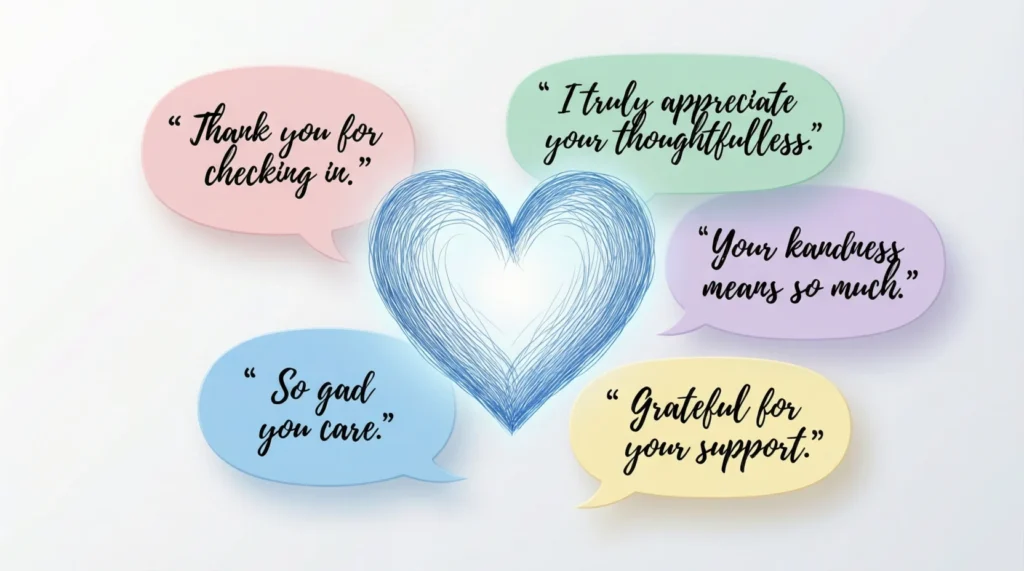
“Thank you for your concern” is a polite way to acknowledge care, sympathy, or attention. Useful alternatives include I appreciate your concern, Thanks for checking in, I’m grateful for your support, Thank you for caring, and I appreciate your thoughtfulness.
The phrase “thank you for your concern” is commonly used when someone shows care, worry, or support, especially during difficult situations. It appears frequently in professional emails, personal conversations, and formal messages.
However, repeating the same phrase can sound distant, overly formal, or emotionally flat. Learning other ways to say thank you for your concern helps you respond with the right tone, warmth, and clarity.
Using varied expressions allows English learners and professionals to express gratitude in English more naturally while adapting to formal, casual, or professional contexts.
“Gratitude sounds more sincere when the tone matches the situation.”
Quick Categories Overview
Formal alternatives to “thank you for your concern”
I appreciate your concern, I’m grateful for your consideration, Thank you for your thoughtful attention, I sincerely appreciate your concern
Pro Tip: Use these in business emails, official messages, or sensitive professional situations.
Professional alternatives
Thank you for checking in, I appreciate your support, Thank you for your understanding, I’m thankful for your attention
Pro Tip: Ideal for workplace communication and polite follow-ups.
Casual alternatives
Thanks for caring, Thanks for asking, I appreciate it, Thanks for looking out
Pro Tip: Best for friends, family, and relaxed conversations.
Warm and empathetic expressions
I’m touched by your concern, Your concern means a lot, Thank you for being thoughtful, I really appreciate your kindness
Pro Tip: Use when emotional warmth matters more than formality.
Common Mistakes When Using “Thank You for Your Concern”
- Using it too formally in casual situations
Example: Thank you for your concern, Mom. - Sounding dismissive unintentionally
Example: Thank you for your concern, but it’s fine. - Using it without emotional warmth
Example: Thank you for your concern. (no follow-up) - Using it sarcastically
Example: Thank you for your concern, really. - Overusing it in professional emails
Example: Repeating the phrase in every reply.
“The right words show appreciation, not distance.”
What Does “Thank You for Your Concern” Mean?
Definition:
“Thank you for your concern” expresses polite gratitude when someone shows care, sympathy, or worry about your situation.
Grammar:
It is a complete polite phrase often used as a standalone sentence or followed by clarification.
Example:
Thank you for your concern. I’m feeling much better now.
When to Use “Thank You for Your Concern”
Common contexts:
- When someone checks on your well-being
- In professional follow-up emails
- After receiving sympathy or support
- During difficult or sensitive situations
Spoken vs Written: Suitable for both
Formal vs Informal: Neutral to formal
Is It Professional or Polite to Say “Thank You for Your Concern”?
- Polite: Yes
- Professional: Yes, but emotionally neutral
Business Example:
Thank you for your concern. I appreciate your understanding during this time.
Pros and Cons of Using “Thank You for Your Concern”
Pros
- Polite and respectful
- Widely understood
- Safe in professional settings
- Emotionally neutral
Cons
- Can sound distant
- Lacks warmth
- Overused
- May feel formal in personal conversations
“Professional gratitude should still feel human.”
Other Ways to Say “Thank You for Your Concern” (With Examples)
These other ways to say thank you for your concern help you sound sincere, empathetic, and fluent. Choose based on emotional tone, relationship, and context.
Formal and Professional Alternatives
1. Phrase: I appreciate your concern
Meaning: Polite acknowledgment of care.
Explanation: A direct and professional alternative.
Example Sentence: I appreciate your concern regarding the situation.
Best Use: Business emails
Worst Use: Casual chats
Tone: Polite, professional
Context Variability: professional
2. Phrase: I sincerely appreciate your concern
Meaning: Deep professional gratitude.
Explanation: Adds formality and sincerity.
Example Sentence: I sincerely appreciate your concern and support.
Best Use: Formal messages
Worst Use: Informal speech
Tone: Formal, respectful
Context Variability: professional, written
3. Phrase: Thank you for your thoughtful attention
Meaning: Gratitude for careful consideration.
Explanation: Sounds refined and respectful.
Example Sentence: Thank you for your thoughtful attention to this matter.
Best Use: Official correspondence
Worst Use: Personal messages
Tone: Formal, courteous
Context Variability: professional
4. Phrase: I’m grateful for your consideration
Meaning: Appreciation for care and thought.
Explanation: Common in professional writing.
Example Sentence: I’m grateful for your consideration during this time.
Best Use: Workplace communication
Worst Use: Casual talk
Tone: Formal, polite
Context Variability: professional
5. Phrase: Thank you for your understanding
Meaning: Appreciation for empathy and patience.
Explanation: Often used when issues arise.
Example Sentence: Thank you for your understanding regarding the delay.
Best Use: Business emails
Worst Use: Emotional support
Tone: Professional, neutral
Context Variability: professional
“Formality shows respect, but warmth builds connection.”
Professional and Neutral Alternatives
6. Phrase: Thank you for checking in
Meaning: Gratitude for follow-up or care.
Explanation: Friendly but professional.
Example Sentence: Thank you for checking in. I’m doing better now.
Best Use: Workplace
Worst Use: Formal letters
Tone: Warm, professional
Context Variability: professional
7. Phrase: I appreciate your support
Meaning: Gratitude for emotional or practical help.
Explanation: Flexible and sincere.
Example Sentence: I truly appreciate your support during this period.
Best Use: Work and personal
Worst Use: Very formal contexts
Tone: Grateful, warm
Context Variability: casual, professional
8. Phrase: Thank you for your kindness
Meaning: Appreciation for caring behavior.
Explanation: Emotionally warmer than “concern.”
Example Sentence: Thank you for your kindness. It means a lot.
Best Use: Personal notes
Worst Use: Legal writing
Tone: Warm, sincere
Context Variability: casual, professional
9. Phrase: I appreciate you reaching out
Meaning: Gratitude for contact and care.
Explanation: Common in emails and messages.
Example Sentence: I appreciate you reaching out to check on me.
Best Use: Emails
Worst Use: Formal reports
Tone: Friendly, polite
Context Variability: professional
10. Phrase: Thank you for your thoughtfulness
Meaning: Appreciation for considerate action.
Explanation: Highlights intention and care.
Example Sentence: Thank you for your thoughtfulness during this time.
Best Use: Thank-you notes
Worst Use: Casual texts
Tone: Warm, respectful
Context Variability: written, professional
Warm and Empathetic Alternatives
11. Phrase: I’m touched by your concern
Meaning: Feeling emotionally moved by someone’s care.
Explanation: This phrase expresses sincere emotional appreciation and personal connection.
Example Sentence: I’m touched by your concern and truly appreciate your kindness.
Best Use: Emotional support
Worst Use: Formal reports
Tone: Warm, heartfelt
Context Variability: personal, written, spoken
12. Phrase: Your concern means a lot to me
Meaning: Deep appreciation for someone’s care.
Explanation: Emphasizes emotional value and personal gratitude.
Example Sentence: Your concern means a lot to me during this time.
Best Use: Personal messages
Worst Use: Legal writing
Tone: Emotional, sincere
Context Variability: personal, spoken
13. Phrase: Thank you for caring
Meaning: Gratitude for emotional attention.
Explanation: Simple, direct, and emotionally open.
Example Sentence: Thank you for caring and checking in on me.
Best Use: Friends, family
Worst Use: Formal correspondence
Tone: Warm, genuine
Context Variability: casual, spoken
14. Phrase: I truly appreciate your kindness
Meaning: Strong gratitude for compassionate behavior.
Explanation: Adds emphasis through “truly,” making it sound sincere and thoughtful.
Example Sentence: I truly appreciate your kindness and support.
Best Use: Personal notes
Worst Use: Very casual chats
Tone: Sincere, warm
Context Variability: personal, written
15. Phrase: I’m grateful for your support and concern
Meaning: Thankfulness for both emotional and practical care.
Explanation: Balanced phrase suitable for personal and professional contexts.
Example Sentence: I’m grateful for your support and concern during this period.
Best Use: Mixed contexts
Worst Use: Casual slang conversations
Tone: Respectful, appreciative
Context Variability: professional, personal
“Empathy-focused phrases strengthen human connection.”
Casual and Friendly Alternatives
16. Phrase: Thanks for checking on me
Meaning: Gratitude for someone following up.
Explanation: Friendly and conversational, common in everyday English.
Example Sentence: Thanks for checking on me. I’m doing much better now.
Best Use: Friends
Worst Use: Formal emails
Tone: Friendly, casual
Context Variability: casual, spoken
17. Phrase: Thanks for asking
Meaning: Appreciation for interest or concern.
Explanation: Short and natural, often used in conversation.
Example Sentence: Thanks for asking. Everything’s going fine.
Best Use: Casual conversations
Worst Use: Professional writing
Tone: Polite, relaxed
Context Variability: spoken, casual
18. Phrase: I appreciate it
Meaning: General expression of gratitude.
Explanation: Flexible but vague without added context.
Example Sentence: I appreciate it. That really helps.
Best Use: Informal replies
Worst Use: Formal letters
Tone: Neutral, friendly
Context Variability: casual, spoken
19. Phrase: Thanks for looking out
Meaning: Gratitude for protective or thoughtful behavior.
Explanation: Informal and conversational, common in spoken English.
Example Sentence: Thanks for looking out for me.
Best Use: Close relationships
Worst Use: Workplace emails
Tone: Casual, appreciative
Context Variability: spoken, informal
20. Phrase: That means a lot, thank you
Meaning: Strong emotional appreciation.
Explanation: Emphasizes sincerity and personal impact.
Example Sentence: That means a lot, thank you for checking in.
Best Use: Emotional moments
Worst Use: Formal writing
Tone: Warm, sincere
Context Variability: personal, spoken
“Casual gratitude feels natural when it’s specific.”
Polite Email Closings
21. Phrase: Thank you for your continued support
Meaning: Appreciation for ongoing care or assistance.
Explanation: Common professional closing phrase.
Example Sentence: Thank you for your continued support.
Best Use: Business emails
Worst Use: Casual texts
Tone: Professional, polite
Context Variability: professional, written
22. Phrase: I appreciate your patience and concern
Meaning: Gratitude for understanding and care.
Explanation: Acknowledges both emotional and practical support.
Example Sentence: I appreciate your patience and concern regarding this matter.
Best Use: Workplace issues
Worst Use: Friendly chats
Tone: Respectful, professional
Context Variability: professional
23. Phrase: Many thanks for your attention
Meaning: Appreciation for time and consideration.
Explanation: Formal and commonly used in written communication.
Example Sentence: Many thanks for your attention to this issue.
Best Use: Formal emails
Worst Use: Spoken English
Tone: Formal, courteous
Context Variability: professional, written
24. Phrase: With thanks for your understanding
Meaning: Polite gratitude for empathy or flexibility.
Explanation: Often used as a closing line in sensitive emails.
Example Sentence: With thanks for your understanding,
Best Use: Apologies, delays
Worst Use: Casual notes
Tone: Polite, formal
Context Variability: professional
25. Phrase: Thank you for your care and attention
Meaning: Appreciation for thoughtful consideration.
Explanation: Balanced and respectful tone.
Example Sentence: Thank you for your care and attention to this matter.
Best Use: Professional writing
Worst Use: Informal messages
Tone: Formal, respectful
Context Variability: professional
“Email gratitude should be polite, clear, and purposeful.”
Informal Spoken Expressions
26. Phrase: Thanks for being there
Meaning: Gratitude for emotional presence.
Explanation: Warm and personal, often used during difficult times.
Example Sentence: Thanks for being there when I needed support.
Best Use: Close relationships
Worst Use: Professional emails
Tone: Emotional, warm
Context Variability: personal, spoken
27. Phrase: Really appreciate it
Meaning: Strong casual gratitude.
Explanation: Slight emphasis makes it sound sincere.
Example Sentence: Really appreciate it. Thanks for checking in.
Best Use: Informal replies
Worst Use: Formal writing
Tone: Friendly, appreciative
Context Variability: casual, spoken
28. Phrase: Thanks so much for caring
Meaning: Warm appreciation for concern.
Explanation: Emotionally open and friendly.
Example Sentence: Thanks so much for caring about me.
Best Use: Personal conversations
Worst Use: Professional contexts
Tone: Warm, casual
Context Variability: personal, spoken
29. Phrase: I’m thankful you checked in
Meaning: Gratitude for follow-up and care.
Explanation: Slightly more reflective than “thanks.”
Example Sentence: I’m thankful you checked in when you did.
Best Use: Personal messages
Worst Use: Business emails
Tone: Sincere, calm
Context Variability: casual, written
30. Phrase: Appreciate the concern
Meaning: Brief acknowledgment of care.
Explanation: Short and neutral, may sound distant if overused.
Example Sentence: Appreciate the concern. Everything’s under control now.
Best Use: Neutral replies
Worst Use: Emotional situations
Tone: Reserved, polite
Context Variability: spoken, casual
Comparison Table: Top Alternatives
| Phrase | Tone | Best Use |
|---|---|---|
| I appreciate your concern | Professional | Business emails |
| Thank you for checking in | Warm | Workplace |
| Thank you for your kindness | Emotional | Personal notes |
| I’m grateful for your support | Neutral | Mixed contexts |
| Thanks for caring | Casual | Friends |
| I sincerely appreciate your concern | Formal | Official writing |
| I appreciate you reaching out | Friendly | Emails |
| Your concern means a lot | Warm | Personal messages |
| Thank you for your understanding | Professional | Work issues |
| Thanks for being there | Casual | Spoken English |
“Gratitude becomes powerful when it feels genuine.”
Mini Quiz: Self-Check
- Which phrase is best for a formal email?
A. Thanks for caring
B. I sincerely appreciate your concern
C. Appreciate it - Which phrase is too casual for work?
A. Thanks for being there
B. Thank you for your understanding
C. I appreciate your support - Which phrase expresses emotional warmth?
A. I await your response
B. Your concern means a lot
C. Thank you for your attention
FAQs
1. Is “thank you for your concern” polite?
Yes, it is polite and respectful, especially in professional contexts.
2. What’s a warmer alternative?
“Your concern means a lot to me” sounds more personal.
3. Can I use it in business emails?
Yes, but consider alternatives for variety and warmth.
4. Is it formal or informal?
It’s neutral to formal in tone.
5. How do I sound sincere when thanking someone?
Match the tone to the situation and add a brief follow-up.
Conclusion
Learning other ways to say thank you for your concern helps you communicate gratitude with clarity, warmth, and professionalism. The right phrase strengthens relationships and avoids sounding distant or repetitive.
Practice different expressions daily and focus on tone awareness to sound more natural and confident in English.
CTA: Which alternative will you use in your next message?
Read More Related Articles:
- Other Ways to Say If I Can Be of Any Help (2026)
- How to Sound Smart in Any Argument With Funny Big Words (2026)

Reuben Cook is a dedicated writer at Wordsmirror.com, known for creating clear, engaging, and well-researched content. He focuses on delivering accurate information in a reader-friendly way, making complex topics easy to understand. Reuben’s work reflects a strong commitment to quality, clarity, and meaningful storytelling.