Quick Answer:
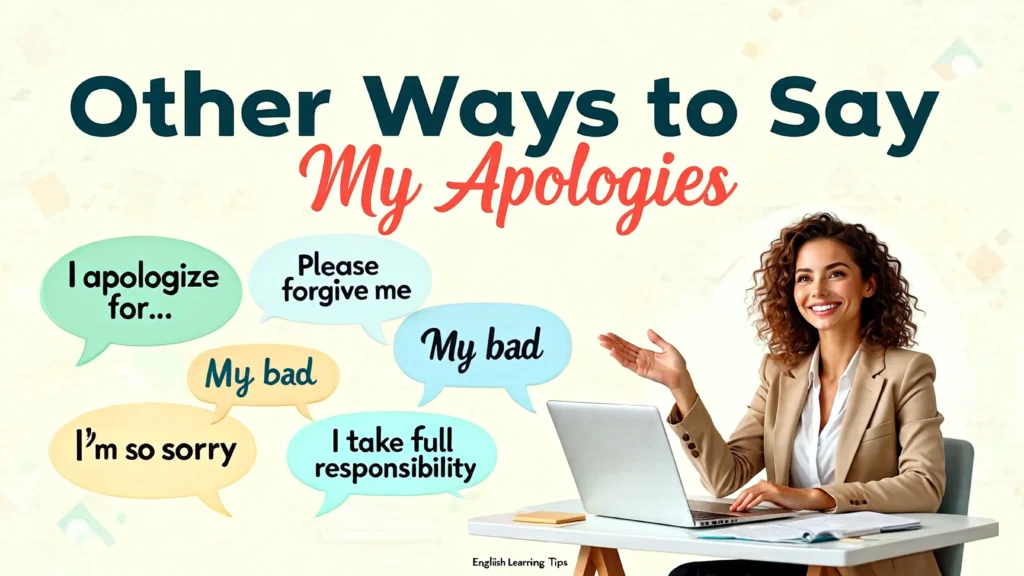
“My apologies” is a polite way to say sorry in English. Top alternatives include:
I’m sorry, Please forgive me, I regret that, Excuse me, Pardon me
The phrase “my apologies” is a formal and polite way to admit a mistake, express regret, or acknowledge an inconvenience. It is commonly used in both spoken and written English, particularly in professional or formal settings.
Learning alternatives to “my apologies” helps English learners communicate more naturally and confidently. Using the right synonym can also help you express excitement in English in social or professional reactions without sounding repetitive.
Mastering multiple ways to apologize improves fluency, expands your vocabulary, and ensures your tone matches the situation—whether formal, casual, or professional.
Quick Categories of Alternatives
Formal Alternatives to “My Apologies”
- I sincerely apologize
- I extend my apologies
- Please accept my apologies
- I regret the inconvenience
Pro Tips: Use these in written emails, official letters, or business communication to maintain professionalism.
Casual Alternatives
- I’m sorry about that
- Oops, my bad
- Sorry for the mix-up
- Didn’t mean to upset you
Pro Tips: These work best in friendly conversations or casual texts.
Professional Alternatives
- I regret the error
- Please forgive the oversight
- I apologize for any inconvenience
- I take full responsibility
Pro Tips: Ideal for workplace emails, client interactions, or team discussions.
Informal Expressions
- My bad
- Sorry ‘bout that
- Totally my fault
- Didn’t mean it
Pro Tips: Use sparingly—mostly with peers or in lighthearted contexts.
Common Mistakes Using “My Apologies”
- Overusing it in casual chats
Example: “My apologies, I’m late” (better: “Sorry, I’m late”) - Using it sarcastically
Example: “My apologies for your inconvenience” (can sound insincere) - Mixing formality with slang
Example: “My apologies, dude” - Using inappropriately in urgent apologies
Example: “My apologies” for serious accidents (better: “I’m deeply sorry”) - Repeating it too often in emails
Example: “My apologies for the delay. My apologies for the error.”
What Does “My Apologies” Mean?
Definition: A polite phrase to express regret or acknowledge a mistake.
Grammar: Usually followed by a brief explanation or context.
Example: “My apologies for missing your call.”
When to Use “My Apologies”
- Formal emails or letters
- Business communication
- Apologizing for minor mistakes
- Addressing clients or superiors
Spoken vs Written: Written: more common in emails; Spoken: can sound stiff unless in professional settings
Formal vs Informal: Formal in professional situations; avoid casual texting
Is It Professional or Polite?
Politeness vs Professionalism:
Polite? ✔️ Yes
Professional? ✔️ Yes (in formal contexts), ❌ No (for casual communication)
Example:
“My apologies for the delayed report; I will send it immediately.”
Pros and Cons of Using “My Apologies”
Pros:
- Simple and natural
- Friendly tone
- Common usage
- Easy to understand
Cons:
- Too formal for work chats
- Overused in emails
- Limited emotional depth
- Not ideal for casual writing
Other Ways to Say “My Apologies” (With Examples)
These alternatives will help you sound fluent, confident, and natural in different situations. Use them according to tone, context, and audience.
- Phrase: I’m sorry
- Meaning: Express regret
- Explanation: Most common, simple apology
- Example Sentence: “I’m sorry for the confusion.”
- Best Use: Casual/Professional
- Worst Use: Formal letter
- Tone: Friendly, sincere, simple
- Context Variability: casual / professional / spoken
- Phrase: Please forgive me
- Meaning: Asking forgiveness
- Explanation: Polite and sincere
- Example Sentence: “Please forgive me for missing the meeting.”
- Best Use: Formal
- Worst Use: Casual chat
- Tone: Respectful, humble, formal
- Context Variability: formal / professional
- Phrase: I regret that
- Meaning: Expressing regret
- Explanation: Neutral and professional
- Example Sentence: “I regret that we cannot meet today.”
- Best Use: Professional
- Worst Use: Casual
- Tone: Formal, polite, neutral
- Context Variability: professional / written
- Phrase: Excuse me
- Meaning: Polite interruption or apology
- Explanation: Can acknowledge minor mistakes
- Example Sentence: “Excuse me for stepping on your foot.”
- Best Use: Casual
- Worst Use: Formal writing
- Tone: Polite, friendly, brief
- Context Variability: casual / spoken
- Phrase: Pardon me
- Meaning: Polite apology
- Explanation: Slightly formal, often spoken
- Example Sentence: “Pardon me for the delay.”
- Best Use: Formal
- Worst Use: Texting
- Tone: Polite, formal, soft
- Context Variability: spoken / professional
- Phrase: I take full responsibility
- Meaning: Acknowledging fault
- Explanation: Strong professional tone
- Example Sentence: “I take full responsibility for the mistake.”
- Best Use: Workplace
- Worst Use: Casual
- Tone: Formal, accountable, professional
- Context Variability: professional / written
- Phrase: I apologize for any inconvenience
- Meaning: Polite regret
- Explanation: Common in business communication
- Example Sentence: “I apologize for any inconvenience caused by the delay.”
- Best Use: Business emails
- Worst Use: Casual chat
- Tone: Professional, polite, neutral
- Context Variability: written / professional
- Phrase: I extend my apologies
- Meaning: Formal apology
- Explanation: Very polite, formal
- Example Sentence: “I extend my apologies for the oversight.”
- Best Use: Formal letters
- Worst Use: Casual text
- Tone: Formal, respectful, professional
- Context Variability: professional / written
- Phrase: Sorry for the mix-up
- Meaning: Casual apology
- Explanation: For minor mistakes
- Example Sentence: “Sorry for the mix-up with the schedule.”
- Best Use: Casual / professional
- Worst Use: Formal writing
- Tone: Friendly, casual, sincere
- Context Variability: casual / professional
- Phrase: Didn’t mean to upset you
- Meaning: Express regret for emotional impact
- Explanation: Acknowledges feelings
- Example Sentence: “I didn’t mean to upset you with my comment.”
- Best Use: Personal / professional
- Worst Use: Formal letter
- Tone: Empathetic, sincere, friendly
- Context Variability: spoken / professional
“The right tone makes your English sound professional and confident.”
- Phrase: My bad
- Meaning: Informal acknowledgment of a mistake
- Explanation: Casual way to admit minor errors
- Example Sentence: “My bad, I forgot to send the file.”
- Best Use: Casual
- Worst Use: Formal emails
- Tone: Casual, friendly, light
- Context Variability: casual / spoken
- Phrase: I regret any inconvenience caused
- Meaning: Polite professional apology
- Explanation: Suitable for work-related issues
- Example Sentence: “I regret any inconvenience caused by the system downtime.”
- Best Use: Professional emails
- Worst Use: Text to friend
- Tone: Formal, professional, respectful
- Context Variability: professional / written
- Phrase: Sorry about that
- Meaning: Casual apology
- Explanation: Short and versatile for everyday use
- Example Sentence: “Sorry about that, I’ll fix it right away.”
- Best Use: Casual / Professional
- Worst Use: Formal letter
- Tone: Friendly, simple, sincere
- Context Variability: spoken / casual / professional
- Phrase: My sincerest apologies
- Meaning: Emphasizing heartfelt regret
- Explanation: Strong, formal apology
- Example Sentence: “My sincerest apologies for the delay in response.”
- Best Use: Formal emails / letters
- Worst Use: Casual chat
- Tone: Formal, sincere, respectful
- Context Variability: professional / formal
- Phrase: I apologize sincerely
- Meaning: Formal and earnest apology
- Explanation: Shows responsibility and politeness
- Example Sentence: “I apologize sincerely for the confusion in the report.”
- Best Use: Professional / formal
- Worst Use: Casual text
- Tone: Formal, sincere, professional
- Context Variability: written / professional
- Phrase: Forgive me
- Meaning: Requesting forgiveness
- Explanation: Polite and often direct
- Example Sentence: “Forgive me for interrupting your meeting.”
- Best Use: Formal / personal
- Worst Use: Casual texting
- Tone: Polite, humble, formal
- Context Variability: spoken / professional
- Phrase: I am at fault
- Meaning: Taking responsibility
- Explanation: Strong acknowledgment of one’s mistake
- Example Sentence: “I am at fault for the miscommunication.”
- Best Use: Professional / formal
- Worst Use: Casual
- Tone: Serious, accountable, professional
- Context Variability: professional / spoken
- Phrase: Apologies for the oversight
- Meaning: Recognizing an error
- Explanation: Common in workplace communication
- Example Sentence: “Apologies for the oversight in the budget report.”
- Best Use: Professional emails
- Worst Use: Casual chat
- Tone: Formal, professional, polite
- Context Variability: professional / written
- Phrase: Sorry for the trouble
- Meaning: Polite acknowledgment of inconvenience
- Explanation: Friendly, semi-formal apology
- Example Sentence: “Sorry for the trouble caused by my delay.”
- Best Use: Semi-formal / casual
- Worst Use: Very formal letter
- Tone: Friendly, polite, professional
- Context Variability: spoken / professional
- Phrase: I regret my actions
- Meaning: Expressing responsibility
- Explanation: Formal, serious tone
- Example Sentence: “I regret my actions and will correct them immediately.”
- Best Use: Formal / professional
- Worst Use: Casual
- Tone: Serious, responsible, professional
- Context Variability: formal / written
“Using alternatives to ‘my apologies’ expands your vocabulary instantly.”
- Phrase: Excuse my mistake
- Meaning: Polite request to overlook a minor error
- Explanation: Slightly formal but gentle
- Example Sentence: “Excuse my mistake in the calculations.”
- Best Use: Professional / formal
- Worst Use: Casual texting
- Tone: Polite, gentle, formal
- Context Variability: written / professional
- Phrase: I beg your pardon
- Meaning: Very polite apology or request for repetition
- Explanation: Formal and courteous
- Example Sentence: “I beg your pardon for the misunderstanding.”
- Best Use: Formal conversation
- Worst Use: Casual chat
- Tone: Polite, formal, respectful
- Context Variability: professional / spoken
- Phrase: I acknowledge my mistake
- Meaning: Taking formal responsibility
- Explanation: Professional and accountable
- Example Sentence: “I acknowledge my mistake and will implement a solution.”
- Best Use: Workplace / formal
- Worst Use: Casual
- Tone: Professional, formal, responsible
- Context Variability: written / professional
- Phrase: I offer my apologies
- Meaning: Polite, formal phrase
- Explanation: Similar to “I extend my apologies”
- Example Sentence: “I offer my apologies for any inconvenience caused.”
- Best Use: Formal emails / letters
- Worst Use: Casual chat
- Tone: Formal, polite, professional
- Context Variability: professional / written
- Phrase: Please accept my apologies
- Meaning: Requesting the recipient to accept the apology
- Explanation: Common formal phrasing
- Example Sentence: “Please accept my apologies for the late submission.”
- Best Use: Formal / professional
- Worst Use: Casual texting
- Tone: Formal, professional, respectful
- Context Variability: written / professional
- Phrase: I shouldn’t have done that
- Meaning: Acknowledging wrongdoing
- Explanation: Casual to semi-formal reflection
- Example Sentence: “I shouldn’t have done that, and I’m sorry.”
- Best Use: Semi-formal / personal
- Worst Use: Very formal letter
- Tone: Honest, reflective, sincere
- Context Variability: spoken / professional
- Phrase: Sorry for the delay
- Meaning: Polite acknowledgment of lateness
- Explanation: Very common in business emails
- Example Sentence: “Sorry for the delay in responding to your email.”
- Best Use: Professional / casual emails
- Worst Use: Informal chat among friends
- Tone: Polite, professional, neutral
- Context Variability: written / professional
- Phrase: I offer my sincerest apologies
- Meaning: Strong, heartfelt apology
- Explanation: Very formal, used for significant mistakes
- Example Sentence: “I offer my sincerest apologies for the oversight in reporting.”
- Best Use: Formal letters / emails
- Worst Use: Casual conversation
- Tone: Formal, serious, professional
- Context Variability: professional / written
- Phrase: My oversight, apologies
- Meaning: Admitting error concisely
- Explanation: Short and professional
- Example Sentence: “My oversight, apologies for the confusion caused.”
- Best Use: Workplace / emails
- Worst Use: Casual speech
- Tone: Concise, professional, polite
- Context Variability: professional / written
- Phrase: I am sorry for my mistake
- Meaning: Clear and direct apology
- Explanation: Simple, professional, versatile
- Example Sentence: “I am sorry for my mistake on the report.”
- Best Use: Professional / personal
- Worst Use: Very formal letter
- Tone: Friendly, polite, responsible
- Context Variability: spoken / written / professional
“Match your apology to the situation for maximum impact.”
Mini Quiz / Self-Check
- Which phrase is best for a formal email to a client?
A) My bad
B) I take full responsibility
C) Oops, sorry - Which is casual and friendly?
A) I extend my apologies
B) Sorry for the mix-up
C) I regret the oversight - You accidentally interrupt someone in a meeting. Which phrase fits?
A) Pardon me
B) I extend my apologies
C) I regret that
Comparison Table: Top 10 Alternatives
| Phrase | Tone | Best Use |
|---|---|---|
| I’m sorry | Friendly | Casual/Professional |
| Please forgive me | Respectful | Formal |
| I regret that | Neutral | Professional |
| Excuse me | Polite | Casual |
| Pardon me | Formal | Spoken |
| I take full responsibility | Professional | Workplace |
| I apologize for any inconvenience | Professional | Business email |
| I extend my apologies | Formal | Letters |
| Sorry for the mix-up | Casual | Work/Casual |
| Didn’t mean to upset you | Empathetic | Personal/Professional |
FAQs
1. Can “my apologies” be used in casual texting?
Yes, but it may sound overly formal. Consider “I’m sorry” instead.
2. What is the difference between “I’m sorry” and “my apologies”?
“I’m sorry” is more versatile and casual; “my apologies” is formal and polite.
3. Are there professional alternatives for emails?
Yes, phrases like “I apologize for any inconvenience” or “Please forgive the oversight” are ideal.
4. Can I use “my apologies” for serious mistakes?
Yes, but consider adding “I take full responsibility” for stronger accountability.
5. Is “my bad” acceptable in professional settings?
No, it’s informal and best used with friends or colleagues in casual environments.
Conclusion
Mastering other ways to say “my apologies” allows you to communicate with precision, confidence, and appropriate tone in every situation. By using formal, professional, casual, and informal alternatives, your English becomes more versatile and polished.
Practice these phrases daily, pay attention to tone, and match your choice to the context. The more you diversify your apologies, the more natural and fluent your English will sound.
Read More Related Articles:
- Other Ways to Say Amazing: 30+ Words and Phrases In 2026
- Other Ways to Say I Will Get Back to You In 2026
- Other Ways to Say “Let Me Know What You Think” Without Sounding Informal (2026)

Peter Murphy is an experienced writer at wordsmirror.com, where he creates informative and engaging content on language, meanings, and modern usage. He is known for his clear writing style, strong research skills, and ability to explain topics in a simple, reader-friendly way.