Quick Answer:
If you want ways to say looking forward to talking to you that sound professional, friendly, or casual, try these top alternatives: Excited to connect, eager to speak with you, can’t wait to chat, anticipating our conversation, talk soon!
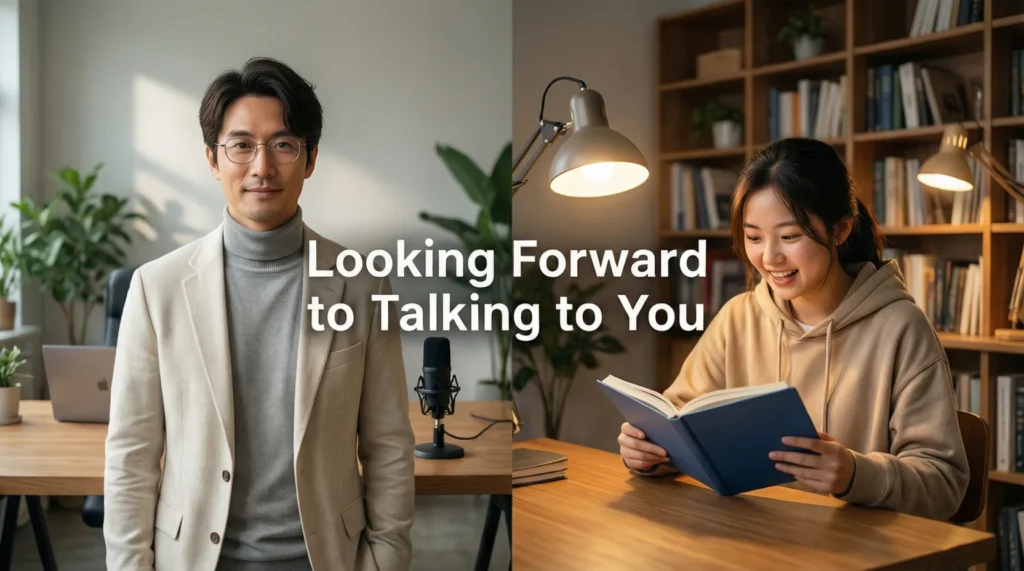
The phrase looking forward to talking to you is commonly used to express anticipation for a conversation. It shows positivity, professionalism, and engagement in both spoken and written English.
People use it in emails, messages, video calls, or face-to-face communication to signal politeness, enthusiasm, or readiness.
Learning alternatives to looking forward to talking to you helps you express excitement in English more naturally and flexibly, making your interactions feel confident and polished.
“The right phrase sets the tone for confident communication.”
Quick Categories Overview
Formal alternatives to “looking forward to talking to you”
- I await our conversation
- I anticipate our discussion
- I am eager to speak with you
Pro Tip: Ideal for official emails, letters, or academic correspondence.
Casual alternatives
- Can’t wait to chat
- Excited to connect
- Looking forward to our talk
Pro Tip: Use in friendly emails or casual office conversations.
Professional alternatives
- I look forward to our discussion
- I am looking forward to our conversation
- Anticipating our upcoming meeting
Pro Tip: Perfect for workplace emails, meetings, and calls.
Informal expressions
- Talk soon!
- Can’t wait to speak
- Catch you soon
Pro Tip: Reserve these for friends, colleagues you know well, or casual follow-ups.
“Small changes in wording can make your anticipation sound polished or casual.”
Common Mistakes When Using “Looking Forward to Talking to You”
- Forgetting “to” after “looking forward”
Example: I’m looking forward our conversation → Incorrect - Using too casual a tone in formal emails
Example: Can’t wait to chat about the contract → Too informal - Overusing the phrase repeatedly
Example: Looking forward to talking to you repeated in every email → Repetitive - Confusing it with “looking forward to hearing from you”
Example: Looking forward to talking from you → Incorrect - Grammatical mistakes in spoken contexts
Example: I looking forward to talking to you now → Incorrect
What Does “Looking Forward to Talking to You” Mean?
It expresses anticipation or positive expectation for a conversation.
Grammar: “Looking forward to” must be followed by a noun or gerund (verb+ing).
Example: I am looking forward to talking to you tomorrow.
When to Use “Looking Forward to Talking to You”
- Scheduling meetings
- Closing emails politely
- Professional follow-ups
- Casual chats among colleagues
Spoken vs Written: Works in both, especially in emails.
Formal vs Informal: Polite and professional, but adaptable to casual contexts.
Is It Professional or Polite to Say “Looking Forward to Talking to You”?
Polite: ✔️ Yes
Professional: ✔️ Yes
Business Example: I am looking forward to talking to you about the project updates next week.
Pros and Cons of Using “Looking Forward to Talking to You”
Pros
- Polite and professional
- Expresses positive expectation
- Commonly understood
- Works in spoken and written contexts
Cons
- Can sound generic
- Overused in emails
- Limited emotional variety
- Too formal for casual chats
“Using varied expressions keeps your communication fresh and confident.”
Other Ways to Say “Looking Forward to Talking to You” (30 Alternatives)
These alternatives will help you sound more fluent, confident, and natural.
Use them according to tone, context, and audience to express excitement in English effectively.
1. Phrase: Excited to connect
Meaning: Looking forward to our conversation with enthusiasm.
Explanation: Friendly and approachable tone.
Example Sentence: Excited to connect tomorrow and discuss the plan.
Best Use: Casual / Professional
Worst Use: Formal letters
Tone: Friendly, enthusiastic
Context Variability: spoken / professional
2. Phrase: Can’t wait to chat
Meaning: Informal eagerness to speak.
Example Sentence: Can’t wait to chat about your new project.
Best Use: Casual messages
Worst Use: Formal emails
Tone: Energetic, informal
3. Phrase: Anticipating our conversation
Meaning: Formal anticipation of discussion.
Example Sentence: Anticipating our conversation on Friday regarding the proposal.
Best Use: Formal emails
Worst Use: Texts to friends
Tone: Professional, confident
4. Phrase: I look forward to our discussion
Meaning: Polite, standard phrase.
Example Sentence: I look forward to our discussion during the team meeting.
Best Use: Business
Worst Use: Casual chat
Tone: Professional, polite
5. Phrase: Talk soon!
Meaning: Casual confirmation of upcoming talk.
Example Sentence: Talk soon! Can’t wait to hear your updates.
Best Use: Friends, colleagues
Worst Use: Formal emails
Tone: Casual, friendly
6. Phrase: Looking forward to our talk
Meaning: Slightly less formal than the standard phrase.
Example Sentence: Looking forward to our talk tomorrow.
Best Use: Professional casual
Worst Use: Very formal letters
Tone: Neutral, friendly
7. Phrase: I am eager to speak with you
Meaning: Showing enthusiasm professionally.
Example Sentence: I am eager to speak with you about the upcoming changes.
Best Use: Meetings, calls
Worst Use: Casual chat
Tone: Formal, enthusiastic
8. Phrase: Can’t wait to speak
Meaning: Short informal excitement.
Example Sentence: Can’t wait to speak about your new idea.
Best Use: Friendly / informal
Worst Use: Corporate reports
Tone: Informal, excited
9. Phrase: Looking forward to catching up
Meaning: Informal expectation for a friendly conversation.
Example Sentence: Looking forward to catching up later this week.
Best Use: Friends, colleagues
Worst Use: Formal letters
Tone: Friendly, casual
10. Phrase: Anticipating our meeting
Meaning: Professional expectation for discussion.
Example Sentence: Anticipating our meeting to finalize the contract.
Best Use: Corporate emails
Worst Use: Casual chat
Tone: Professional, formal
11. Phrase: I’m thrilled to speak with you
Meaning: Shows excitement and positivity.
Example Sentence: I’m thrilled to speak with you about the new strategy.
Best Use: Professional / Friendly
Worst Use: Very formal reports
Tone: Excited, warm
12. Phrase: Can’t wait to connect
Meaning: Informal, enthusiastic.
Example Sentence: Can’t wait to connect and share ideas.
Best Use: Texts, informal emails
Worst Use: Formal letters
Tone: Casual, friendly
13. Phrase: Looking forward to our conversation
Meaning: Classic neutral professional phrase.
Example Sentence: Looking forward to our conversation tomorrow.
Best Use: Professional emails
Worst Use: Casual texts
Tone: Neutral, polite
14. Phrase: Excited to talk with you
Meaning: Friendly, approachable anticipation.
Example Sentence: Excited to talk with you about your feedback.
Best Use: Casual / semi-professional
Worst Use: Strictly formal reports
Tone: Friendly, positive
15. Phrase: I await your insights
Meaning: Formal, professional.
Example Sentence: I await your insights during our discussion.
Best Use: Business / academic
Worst Use: Casual emails
Tone: Formal, confident
16. Phrase: Looking forward to hearing your thoughts
Meaning: Shows anticipation for ideas.
Example Sentence: Looking forward to hearing your thoughts on this project.
Best Use: Professional emails
Worst Use: Casual chats
Tone: Polite, professional
17. Phrase: Excited for our discussion
Meaning: Friendly, slightly formal.
Example Sentence: Excited for our discussion tomorrow at 2 PM.
Best Use: Professional / semi-formal
Worst Use: Text to close friend
Tone: Friendly, polite
18. Phrase: Can’t wait to hear from you
Meaning: Informal eagerness for reply or conversation.
Example Sentence: Can’t wait to hear from you after your meeting.
Best Use: Friendly / informal
Worst Use: Corporate emails
Tone: Casual, enthusiastic
19. Phrase: Looking forward to our dialogue
Meaning: Slightly formal, professional.
Example Sentence: Looking forward to our dialogue during the panel session.
Best Use: Business, academic
Worst Use: Casual chat
Tone: Formal, polite
20. Phrase: I am enthusiastic to discuss
Meaning: Formal, professional tone.
Example Sentence: I am enthusiastic to discuss your proposal next week.
Best Use: Corporate meetings
Worst Use: Casual talk
Tone: Formal, excited
21. Phrase: Talk with you soon
Meaning: Informal confirmation of upcoming talk.
Example Sentence: Talk with you soon, can’t wait!
Best Use: Casual chats
Worst Use: Formal emails
Tone: Casual, friendly
22. Phrase: Looking forward to speaking with you
Meaning: Professional, classic email closing.
Example Sentence: Looking forward to speaking with you about the quarterly report.
Best Use: Professional emails
Worst Use: Texting friends
Tone: Neutral, professional
23. Phrase: Excited for our chat
Meaning: Informal enthusiasm.
Example Sentence: Excited for our chat tomorrow morning!
Best Use: Informal work chat or friendly email
Worst Use: Formal reports
Tone: Friendly, enthusiastic
24. Phrase: Anticipating your insights
Meaning: Formal, polite.
Example Sentence: Anticipating your insights on this strategy.
Best Use: Professional meetings
Worst Use: Casual conversation
Tone: Professional, formal
25. Phrase: Can’t wait for our conversation
Meaning: Informal enthusiasm.
Example Sentence: Can’t wait for our conversation later today.
Best Use: Informal / semi-professional
Worst Use: Strictly formal letters
Tone: Casual, energetic
26. Phrase: Excited to discuss
Meaning: Friendly professional tone.
Example Sentence: Excited to discuss the upcoming project timeline.
Best Use: Work chat / semi-formal emails
Worst Use: Academic papers
Tone: Friendly, positive
27. Phrase: Looking forward to connecting
Meaning: Neutral, versatile.
Example Sentence: Looking forward to connecting with you next week.
Best Use: Professional and casual emails
Worst Use: Informal texting slang
Tone: Polite, professional
28. Phrase: Talk to you soon
Meaning: Informal friendly expectation.
Example Sentence: Talk to you soon, excited to share updates!
Best Use: Friends / colleagues
Worst Use: Formal letters
Tone: Casual, friendly
29. Phrase: I am keen to speak with you
Meaning: Formal interest and eagerness.
Example Sentence: I am keen to speak with you about the new policy changes.
Best Use: Professional / business meetings
Worst Use: Texting friends
Tone: Formal, interested
30. Phrase: Looking forward to our exchange
Meaning: Formal, slightly academic.
Example Sentence: Looking forward to our exchange during the conference call.
Best Use: Formal discussions
Worst Use: Casual conversations
Tone: Formal, professional
Comparison Table: Top Alternatives
| Phrase | Tone | Best Use |
|---|---|---|
| I look forward to our discussion | Professional | Business meetings |
| Excited to connect | Friendly | Emails / calls |
| Can’t wait to chat | Informal | Friends / colleagues |
| Anticipating our conversation | Formal | Official emails |
| Talk soon! | Casual | Informal spoken |
| I am eager to speak with you | Professional | Workplace calls |
| Looking forward to catching up | Friendly | Colleague chats |
| Can’t wait to speak | Informal | Friendly texts |
| Anticipating our meeting | Formal | Corporate emails |
| Looking forward to our talk | Neutral | Mixed professional |
Mini Quiz
- Which phrase is best for a formal email?
A Excited to connect
B I look forward to our discussion
C Talk soon! - Which phrase is informal and friendly?
A Anticipating our conversation
B Can’t wait to chat
C I am eager to speak with you - Which is suitable for casual colleagues?
A Looking forward to catching up
B Anticipating our meeting
C I look forward to our discussion
Answers: 1 B, 2 B, 3 A
FAQs
What is a professional alternative to looking forward to talking to you?
I look forward to our discussion or I am eager to speak with you.
Can I use “Can’t wait to chat” in emails?
Only in informal or friendly emails, not formal business communication.
What’s the difference between “looking forward to talking to you” and “looking forward to hearing from you”?
Talking implies a conversation, hearing implies waiting for a reply.
Are there casual English expressions for looking forward to talking to you?
Yes, e.g., Talk soon! or Can’t wait to chat.
Why should English learners learn alternatives?
It increases fluency, tone control, and confidence in professional and casual contexts.
Conclusion
Mastering other ways to say looking forward to talking to you allows you to adapt your tone for professional, friendly, or casual conversations.
Practice these alternatives daily to sound confident and natural in emails, calls, and in-person interactions.
Read More Related Articles:
- Have a Great Rest of Your Day: 30 Better Ways to Say It (2026)
- Other Ways to Say “Let Me Know What You Think” Without Sounding Informal (2026)
- Other Ways to Say Looking Forward to Working With You (2026)

Tom Sanders is a professional writer at Wordsmirror.com, with a strong focus on creating informative, engaging, and easy-to-read content. He brings clarity and depth to a wide range of topics, helping readers understand ideas quickly and confidently. Tom is committed to delivering high-quality writing that is both accurate and reader-focused.